
Control stand
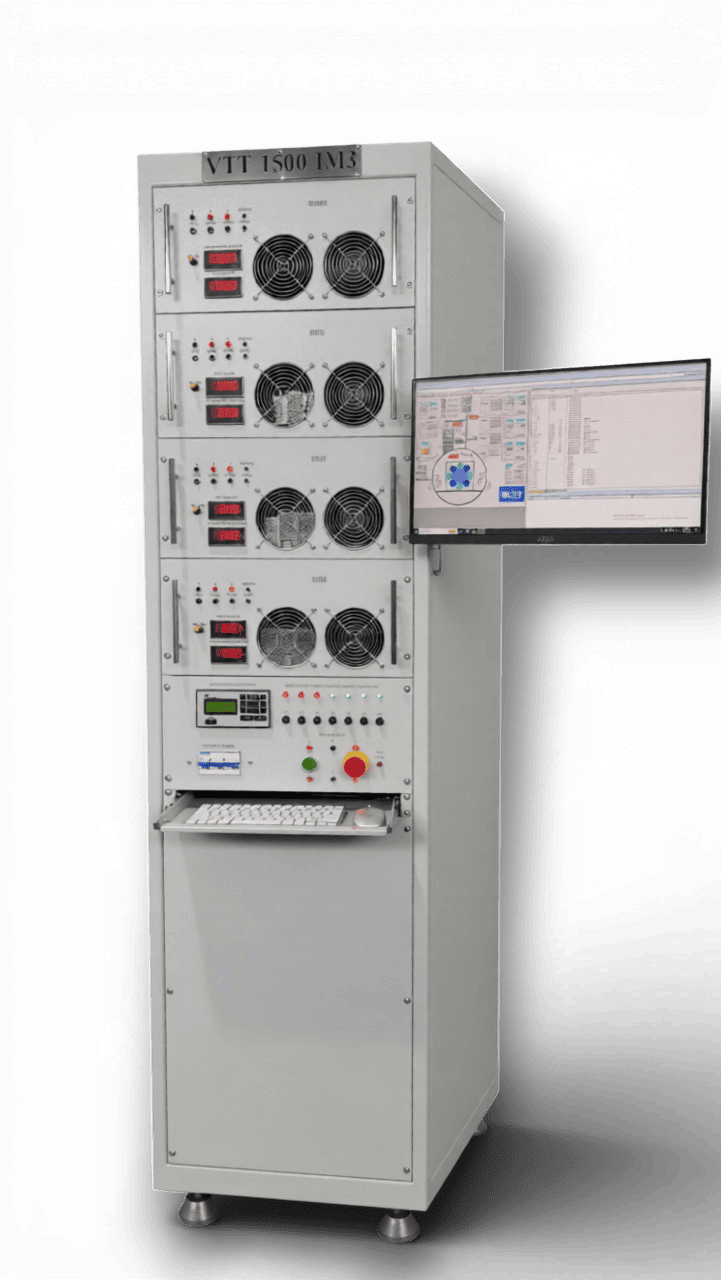
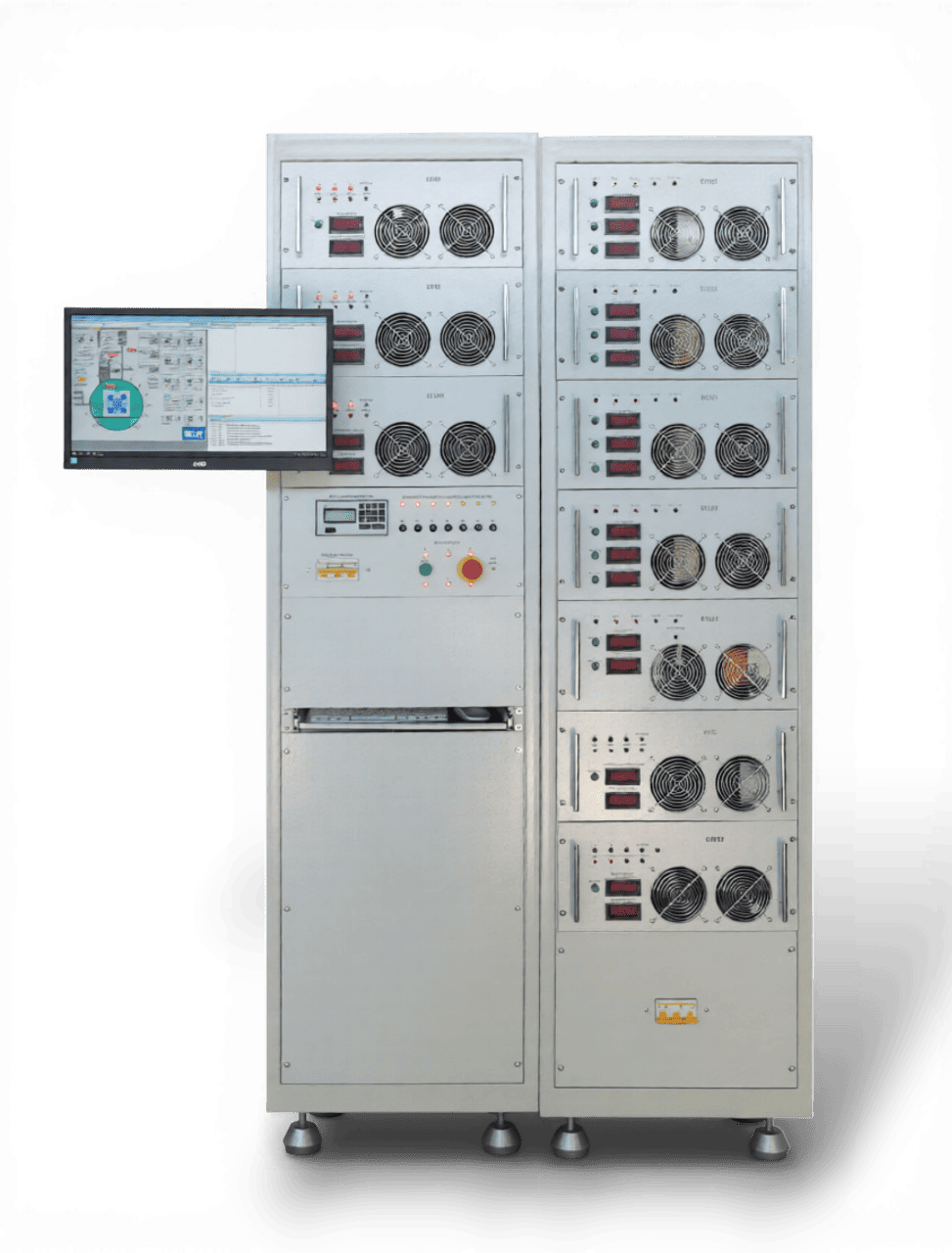
The control console is the single point of interaction and control for the vacuum system. It integrates power modules, control electronics, and computing power, ensuring process stability and operator safety. Interface and Control
• Operator Workstation: The system is equipped with a monitor and a pull-out shelf for input devices. All processes (pumping, sputtering) are controlled via specialized ConVac software.
• Sputtering Control: – The integrated SQC-310C controller provides high-precision quartz film thickness control in real time. – The optical control system operates over a wide spectral range and allows for monitoring two key parameters: 1. Transmittance (T-control): Critical for the production of light filters, lenses, screens, and glass with specified light transmittance. The system tracks changes in transparency, ensuring tolerances are met with an accuracy of a fraction of a percent. 2. Reflectivity (R-control): Essential for creating mirror surfaces, interference mirrors, and decorative coatings. Reflectivity control allows for precise adjustment of the color depth and gloss of the product. Measurements are performed directly in a vacuum without interrupting the process. This enables automatic deposition stop (cutoff) when ideal spectral characteristics are achieved. The system is indispensable for creating complex multilayer structures, where the correlation between the thickness of each layer and its optical response is crucial. All spectral curves are visualized on the operator’s monitor and stored in the logs for each batch, creating a complete digital product data sheet. Functional Modules The control system is divided into specialized groups: 1. Integrated Process Source Control System Our electrical cabinet is equipped with a modular control system that allows for monitoring all types of energy effects in the vacuum chamber. Each unit is integrated into a common digital network and controlled via a single interface in the ConVac software. Power Module Configuration:
• Electron Beam Evaporation (EBE): The heart of the system is a Master/Slave controller and an APEL-HV high-voltage power supply with a power output of up to 10 kW. The system guarantees exceptional electron beam stability and ultra-precise focusing on refractory materials.
• Magnetron Sputtering (MS): Inverter power supplies ensure high deposition rates and layer uniformity when working with both metals and dielectrics.
• Arc Evaporation (AEE): Dedicated units for controlling the evaporation process. These units include automatic ignition and dynamic arc stabilization systems, which are critical for producing high-quality coatings. 2. Ion Cleaning: A separate power supply controls the ion cleaning system, which prepares the surface before application and assists during layer growth to improve adhesion. Ion sources are a key tool for ensuring flawless adhesion and density of deposited layers. Depending on the technology, we offer two types of sources: Closed Drift Sources (CDS) A universal solution for cleanliness and density. They generate a broad ion beam with moderate energy. Ideal for processing complex parts and large batches.
• Purpose: Thorough ion cleaning of surfaces before deposition and ion assistance (compacting the film structure during growth).
• Result: Eliminates delamination and increases coating hardness. Target Layer Sources (TALS) Powerful energy for intense action. They generate a focused, “hard,” high-energy ion beam. Their simplified design, without a heating cathode, increases their reliability.
• Purpose: Deep surface etching, intensive preparation, and work in specific gas environments (e.g., reactive sputtering).
• Result: Maximum preparation speed and operation at ultra-low pressures. 3. Protection and autonomy: A PC and an uninterruptible power supply (UPS) are installed inside the cabinet. In the event of a power surge or power outage, the UPS will save data and allow the controller to correctly terminate or pause the cycle. Thoughtful layout
• Ease of maintenance: All internal components are located on the mounting panel, and a separate connector panel is provided for quick connection of the unit components.
• Compactness: Despite the complex components, all units are assembled in a single ergonomic housing, saving space.