
Rubber seals
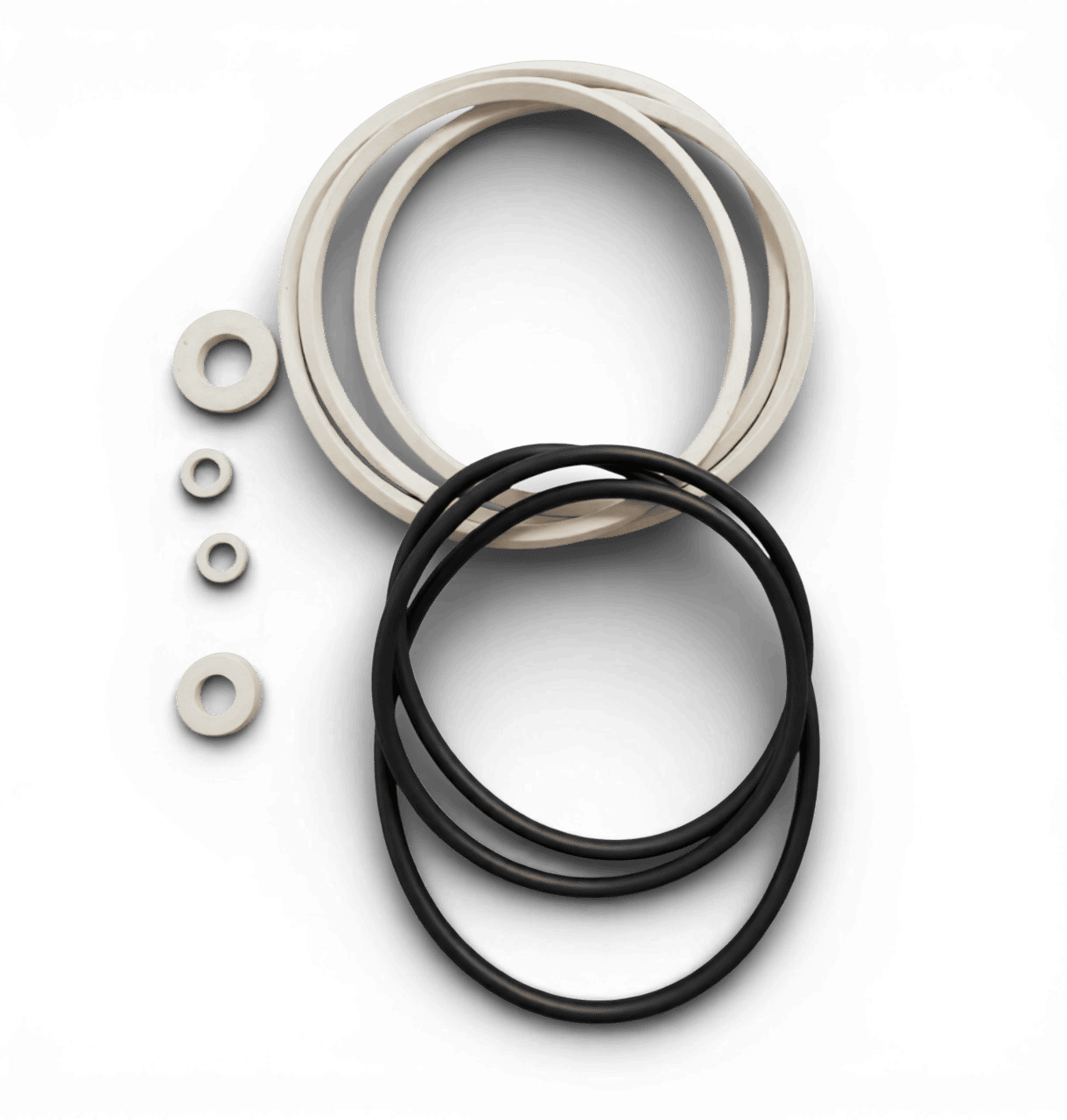
Fluororubber (FKM/Viton) Seals In high-vacuum systems, there are no “little things” to worry about. Ultimate pressure performance is directly dependent on the diffusion resistance and outgassing properties of the elastomers. That’s why we use fluororubber (FKM) seals in our systems—a material rightfully considered the “gold standard” in vacuum technology. Why is this important for your system? Conventional rubber (NBR) begins to “outgas” when high vacuum is reached, releasing plasticizer molecules that prevent the pressure from dropping to the required values and contaminate the sprayed layers. Fluororubber compounds eliminate this drawback. Key advantages:
• Low desorption coefficient: Fluororubber exhibits minimal outgassing under high vacuum conditions. This allows for faster ramp-up to operating conditions and maintains the process environment in perfect cleanliness.
• Extreme chemical inertness: Seals are resistant to aggressive environments, plasma, and the effects of working gases. They do not degrade or harden when exposed to oil vapors or active chemical agents.
• Thermal stability: The material maintains its elastic properties over a wide temperature range (up to 200°C and above). This is critical for components located near heat sources such as magnetrons or electron beam evaporators.
• Minimal residual deformation: FKM seals with “shape memory” significantly outperform similar seals. Even after prolonged compression in joints, they restore their structure, ensuring system tightness over many fill and evacuation cycles. Process purity The use of fluororubber seals eliminates the risk of hydrocarbons entering the spray zone. This guarantees high film adhesion and stable optical and electrical properties of your coatings.